Be Careful What You Wish For…

IMG_2403

Yes, this is me wearing my new Fitbit. And that’s not all, but more on that later.

Maybe it has been the long, cool start to spring  but it has been hard for me to get into a new, more movement centred life this year. As is my practice every month, I do a little introspection and come up with something that I feel would enhance my well being in some way. This past month I decided I needed to focus on health. I am not as flexible as I would like to be and my knees just don’t bend in the ways they used to.  I also know I need to move more, which is where the Fitbit comes in. I decided to buy it for two reasons. The first being its handy step tracker that I can set to a level that ensures I am out and moving more consistently and for longer periods. It is presently set at 10,000 steps and I haven’t managed to meet that goal yet. I am blaming it on the rain! The second reason is a bit more obscure. I like to write early in the morning and lately I have had to set an alarm in order to wake up. The alarm wakes me but also my husband who has been preferring a little more sleep. I happened to read that the Fitbit has an alarm feature that allows it to vibrate on your arm at wakeup time. Decision made.

As everyone knows, movement is only one part of a healthy lifestyle. Enter the second part and probably the hardest – making sure the foods I eat also enhance my health. Some of the writers I admire and follow online have been doing this eating plan called the Whole30. I figured if I was willing to invest in a Fitbit,  I could go  one step further and check out this eating plan that was creating such a stir. I ordered the book and it arrived the other day. All I can say is that it is BIG. I was expecting something much smaller and simpler, maybe a little paperback with a few diet suggestions and some great recipes. But no. This book has 421 pages with planning plans and shopping strategies! Eek! I am presently  on page 90.

IMG_2404.JPG

The Whole30 is not a diet but a plan to go without some of the common allergens and inflammation causing foods for one month and then reintroducing these foods slowly to see how your body reacts. Armed with this knowledge you can adjust your diet to eliminate or go more moderately with these problem foods. It all makes sense. But it is a full month’s commitment and 421 pages of planning. I am already trying to imagine a month without chocolate or wine. Wonder if these just might be some of my problem foods? (I wish I had an emoticon I could add here!)

I’ll let you know how this all works out, but in the meantime, have a glass of wine for me.


The Ritual of the After Dinner Walk

IMG_2390

Here in the northeast it is dark and cold for six months of the year. Which means that at its darkest we lose the sun at about 4:00 in the afternoon. This makes for long evenings inside by the fire which is quite enjoyable in January but is crazy making as the season progresses. (Hello Netflix and the Movie Channel!)

In early spring Daylight Savings Time puts an end to the premature closing of the day.  Once again the evenings hold some promise and for me that means I can go for a walk after dinner.  On the colder, wetter spring days this requires some discipline but mostly it is just so nice to be out and moving again. The added bonus – I get to see spring arriving on our road bird by bird, tree by tree.

Our road is an unpaved, mountain road that rises steeply to open up to this at the top.

IMG_2395

The marker where I am sitting is directly on the Canadian/American border and is where I stop to catch my breath from the steep climb and to rest in the wonder of the long distance view.  It’s a fitting end to any kind of day.

Do you have an evening walk ritual that helps bring closure to your day?

Fiddleheads….a delicacy or just bland?

Foraging

IMG_2371.JPG

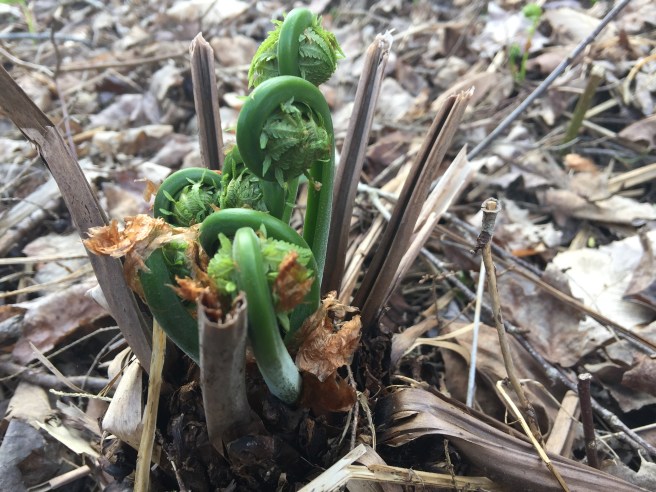
When I hear the word forage it conjures up images of Euell Gibbons of Stalking the Wild Asparagus fame walking for miles in wilderness areas in search of the elusive plant he is intent on finding. Which is why when I use the word foraging and fiddleheads in the same breath it feels a little bit laughable. You see, if I wanted to, I could go and pick fiddleheads at this moment in my pyjamas. They grow that close to the house – a meander down the walkway, a sharp right towards the brook, a short downhill slope and voilà!

My second confession about foraging for fiddleheads is that I am really not a big fan of this first edible wild plant to sprout. I find it bland. It tastes herbaceous, a bit like I imagine grass would taste if steamed. So this year I have set myself the mission of seeing once again if I can find anything about it that warrants the picking and cleaning and cooking.

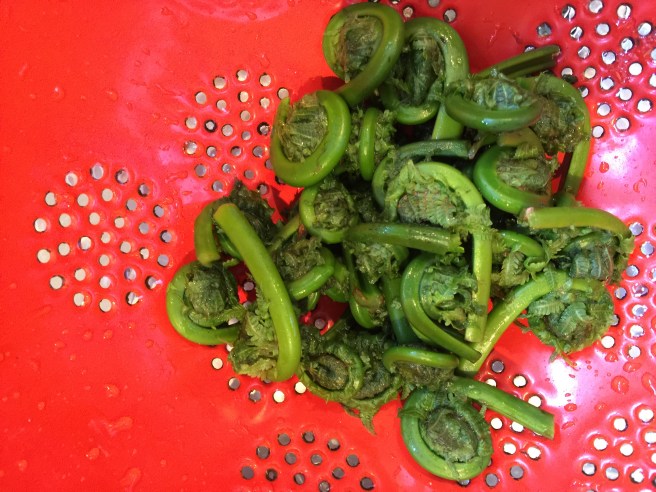
Fiddleheads (Ostrich Ferns) before they unfurl are encased in a brown paper-like leaf that needs to be removed. I have found the best way to do this is to bounce them up and down in a basket and let the wind carry them away. They are then ready to be rinsed and this usually takes a least two rinsings. After they have been cleaned they are ready to be

IMG_2375.JPG

boiled or steamed. They must be well cooked to remove the tannins and any microbes present. I was taught to cook them in two changes of water and you will quickly see why. The cooking water turns quite black. Health Canada advises boiling them for 15 minutes or steaming them for 10 to 12 minutes.

I used to just boil the fiddleheads and then add salt and pepper and a little lemon, but I am thinking that the extra step of sautéing might be what takes these wild edibles from bland to enjoyable for me.

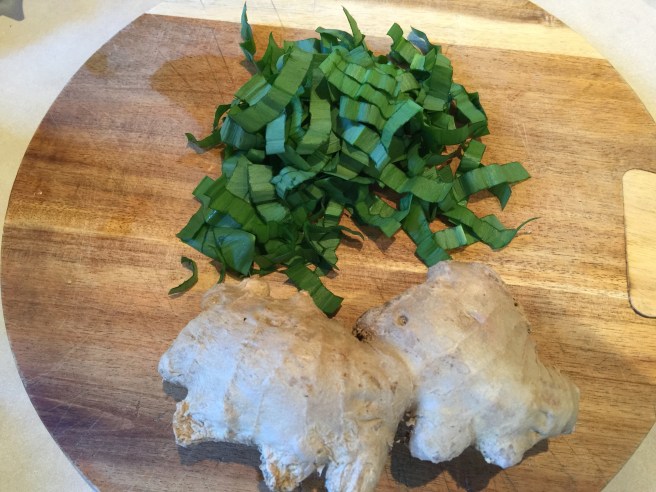
My first test with sautéing them after cooking involved adding some ginger and wild garlic leaves. I threw in a little Hoisin sauce for good measure. 

The Verdict: The ginger, garlic and Hoisin were delicious but tasted oddly weird on the just picked fronds.

IMG_2374

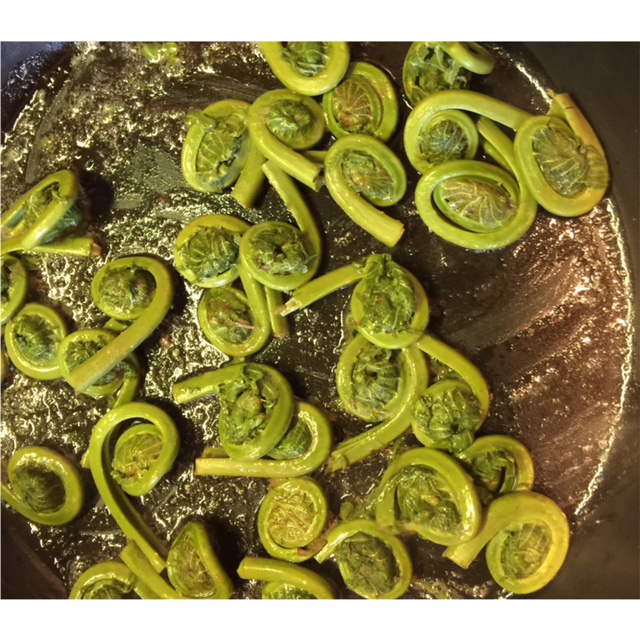
On to taste test two. This time I have decided to steam the fronds. Health Canada advises to steam for 10 to 12 minutes. I decided on the longer cooking time although I think 10 minutes would have been fine. The final sautéing step involved placing them in a frying pan with about a tablespoon of melted butter.

IMG_2396

A quick sauté, some added salt and pepper, a squeeze of lemon and I called them done.

The Verdict: These were the best fiddleheads I have had to date. The butter added a little extra flavour and the fronds had a fresh green taste. I have to say the appeal for me is that these are the first edible green plants to make an appearance and I feel so ready to begin eating fresh and local again. 

Whether delicious or bland is your verdict no one can dispute that they contain omega 3 and 6 fatty acids and are a source of antioxidants and dietary fiber. Enjoy!


Bloodroot…native flowering plant #2

IMG_2357.JPG

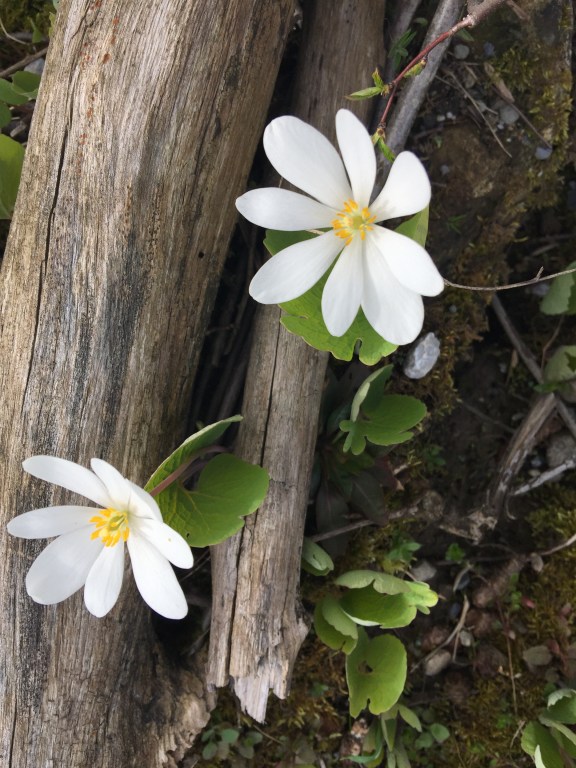
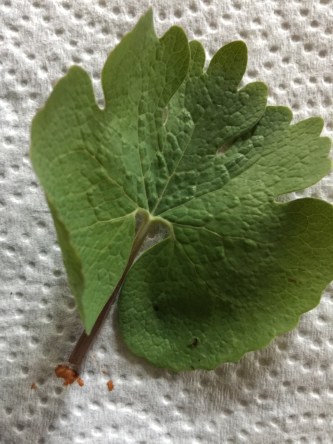
Bloodroot (Sanguinaria Canadensis) is the second native plant to flower along our roadside in the spring – and my personal favourite. It has 8 to 12 delicate white petals and yellow stamens. If you break the flower stalk or cut into the rhizome you will see a very  bright orange liquid seeping out. Hence the name.

IMG_2378.JPG

There’s something otherworldly about these first appearances of native plants in what is for the most part still a barren landscape. I can’t help but imagine what a gift these first flowering plants were to our ancestors who struggled through a long winter and were looking for remedies for the vitamin deficiencies and other ills that befell them during the winter months.

The rootstock of bloodroot is caustic and poisonous but has been used medicinally for its antiseptic and emetic (causing vomiting) properties. People found a way to use these first flowering plants in safe ways but I can only imagine the trial and error that went into making these discoveries. On a safer note, the bright orange liquid that is so startling when first seen was discovered to be a great natural dye and was used by basketmakers.

The wheel of the season continues to turn and with it my attention turns to some of the first edible wild plants that can be foraged in this area. Stay tuned.

Beginnings and Endings

IMG_2349.JPG

I have been thinking about beginnings today. It is the first really warm and sunny start to a spring day we have had this year and the garden is full of daffodils, scilla, and hyacinths in full bloom. I have just cracked open a brand new moleskin journal with all the potential that holds and we are at the new moon phase of the month. All beginnings, and all holding the joy of the unknown that is about to unfold.

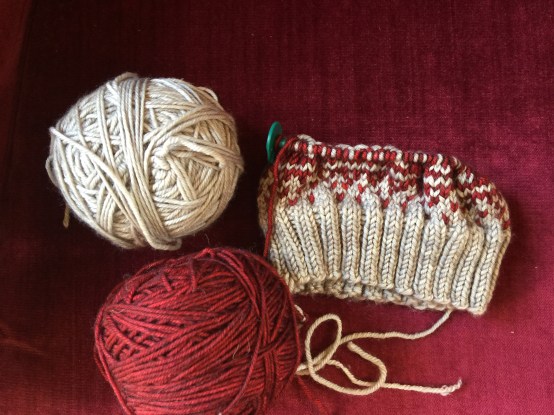
Along with beginnings, of course, also come endings and I have been thinking about those also.  I am thinking today of some of the endings that I have not done well. I have this beautiful sweater sitting in my basket with only a small part of a sleeve and a button band to finish.

IMG_2352.JPG

It has been there for a year, maybe two. And this hat…

IMG_2351

Both projects will require some concentration and relearning on my part because they have been put away for so long. But as I look at them now I can see the beauty in them that attracted me in the first place. Maybe I don’t finish things when they get hard because it is easier to move on to the next exciting project than to stay with the much more difficult task of bringing something to completion.

It is not only my knitting project basket that holds the discomfort of the unfinished. I have two university certificates each lacking the final course because when it came time to complete them my life had moved in a different direction. I am not good at dividing myself. It is a quality of mine and also a fault as all my unfinished projects so vividly remind me.

I am getting better at completions. I have had to. I am learning that as hard as they are, they are the necessary final act: the tying together of all that has come before. My greatest teacher about this was my father. I am thinking about him this morning because it was on a day something like this six years ago that he was diagnosed with a brain tumour. He died within three months. I had had my own first really serious health issue shortly before but I knew I had to be there for my dad’s final act. This was not something I could leave in a project basket to pick up again later. There were no final chances here. I showed up for him every day even though it was gut wrenchingly hard and my tears flowed freely. It taught me about resilience and love and doing the right thing even though it took every bit of emotional stamina I had. And it taught me that endings can be even more beautiful than beginnings if they are done with presence and love.

And for this final lesson, I am forever grateful.

Responsibility Anyone?

A healer friend of mine has developed a universal set of mantras for us to use on our journey to wellness and the very first one on her list is I am responsible for myself.  You might think, as I did, “Well, this is pretty self evident.” But is it?

There is a psychological model called the Drama Triangle developed by psychiatrist Stephen Karpman that helps explain how many (most) of us navigate our relationships in life starting with our families. Lynne Forrest who has done a lot of work in demystifying the Drama Triangle explains, “Whether we know it, or not, most of us react to life as victims. Whenever we refuse to take responsibility for ourselves, we are unconsciously choosing to react as a victim. This inevitably creates feelings of anger, fear, guilt or inadequacy and leaves us feeling betrayed, or taken advantage of by others.”

fullsizeoutput_1cd

I have been thinking a lot about responsibility lately because I am the sole family member living in proximity to my 95 year old mother and taking care of her needs has been a big part of my life for the last number of years. I fluctuate between feeling resentful, exhausted and overwhelmed to feeling a great appreciation and love for this time we get to spend together. This split got me thinking about what was creating these two very different realities – one where I feel at peace and the other where I feel obligated and guilty.

Lynne Forrest feels that the difference is in being responsible to as opposed to being responsible for another person. Ultimately we are only responsible for ourselves. And others are responsible for themselves. Where these lines get blurry are in the very young and the very old. The vulnerable obviously need someone there overseeing the situation and keeping them safe.

I have come to realize that the key for me is taking responsibility for myself first and that means checking in to see what I need every day before making myself available to others. (The airline protocol of putting  on our own oxygen mask before helping others illustrates this concept beautifully.) This respect I show for myself helps me to show the same respect to others, so I am less likely to try and fix and more likely to listen. I am still a work in progress: I have spent many years in the rescuer role. But it sure is nice to know there is another way that brings greater love and acceptance into my life.

*If you feel like exploring the Drama Triangle in more depth you can go here.

Soup’s On!

IMG_2304.JPG

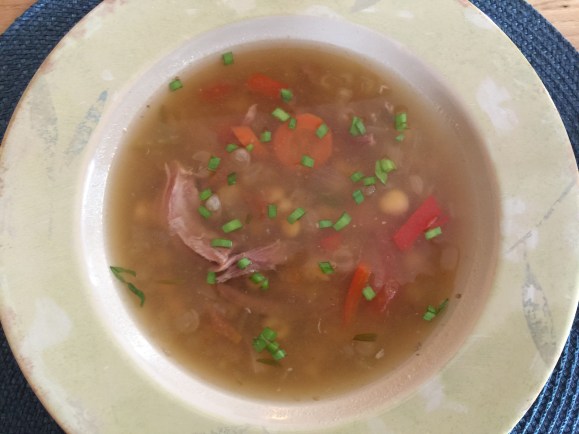
Split pea soup made with the leftover ham bone from Easter dinner.

I make soups. I think it started when we used to have a wood stove in the kitchen and putting a pot on it to simmer throughout the day seemed like such a good thing to do. We no longer have a wood stove in the kitchen but the soup making tradition has never left and it would be a rare week when there is not a homemade soup for lunch.

When I began I used to follow recipes and can still remember one of the first soups I made and loved called Lentils Monastery Style from the iconic cookbook “Diet For a Small Planet.” It was thick with carrots and lentils and was the perfect meal on a cold winter day. I sometimes still use recipes and never regret it when I do. There is something to be said for cooks who take the time to make sure the ingredients are in the right proportions and seasoned perfectly. But these days, I am more than likely to make a soup from whatever is in the fridge.

My soups usually begin with a mirepoix: a mixture of diced carrot, onion and celery sautéed gently before adding stock and whatever other ingredients I feel like adding that day. I make my own stock if I have a chicken carcass or ham bone but most often I use a prepared  organic stock. I am not a fan of dehydrated stocks in the traditional cubes. I find that they have usually been seasoned and I can always taste these seasoning in my soup. I prefer to be in charge of the seasoning.

IMG_2295

If a vegetable soup is in the works I will often take the time to roast the vegetables in the oven before adding them to the soup pot. They develop so much flavour when cooked this way.  Your  soup will thank you for taking  this extra step. I often end up pureeing my soups at the end or  pureeing only part of it and leaving in some recognizable vegetable pieces. But this step depends on the type of soup I am making.

Seasoning the soup is done throughout but never skip the step of  tasting the soup at the end and making final adjustments. It will often need more salt or pepper and sometimes some lemon to brighten the flavour. It can sometimes also need more of the original seasonings. It’s all a matter of taste and you will know when you have it right.

Developing a soup making habit was one of the best things I have ever done. It makes lunchtimes so easy: a pot of soup goes a long way.  I don’t think there is much that is appreciated more by those we feed than a good bowl of soup. Yum…


Five Stages of Creativity

There was an internet meme being passed around a few years ago that struck me as truth. It described the five stages of creativity this way:

This is awesome.
This is tricky.
This is terrible.
I am terrible.
This is awesome.

Nothing I had seen to date had captured my creative process so accurately.

This Is Awesome

I am a lover of the blank page, a still rolled skein of wool, an untouched canvas on an easel, a bare patch of soil waiting to become a garden. They are all so ripe with possibility that my heart skips a beat just thinking of all the beauty lying dormant waiting to explode out into the world. There is nothing quite so saturated with colour and possibility as the imagination. Imagination lies in the realm of the gods. That is, until we try and pluck it from the ethers and bring it down to earth.

Ann Patchett, the American novelist, describes this phenomenon in her short story The Getaway Car . She likens her imagination to a butterfly with wings of indescribable beauty as if cut from the panes of the rose window in Notre Dame. It is glorious and free and holds all the possibility of the world. Then she begins to write and it is here that the butterfly gets killed.
It’s not that she means to kill it, it’s just what happens when something as beautiful and three dimensional as the imagination gets flattened into two dimensional form with words.

It’s an act of great bravery to put the first stroke of paint on the canvas or to type those first tentative words on the blank page. Most people never get to this point. That is how much courage it takes. Giving myself permission to play and not worry about the finished product has been the key for me. I have never completed a project that doesn’t have some mistake woven into it. Many times the final work feels as if it only tells part of the story and is unfinished somehow. I am okay with that now. Paul Gardner says it this way, “ A painting is never finished – it simply stops in interesting places.” The mistake, the imperfection, is what gives my knitting character, my words a voice , my gardens my personal imprint.

This Is Tricky

I am drawn to create and work with my hands but nothing quite prepared me for the extreme discomfort I inevitably feel at some point in every project I undertake. The initial excitement (bordering on euphoria) of beginning a project moves quite quickly into the “this is tricky” phase for me. I remember painting for the first time and realizing that the paint was not behaving in the ways I was expecting. It was thick and began drying before I could get it on the canvas. The luxurious, cashmere wool I bought also held so many possibilities for me. I had never felt anything so soft and buttery and just thinking about it next to my skin sent me into paroxysms of joy. Only to discover that the fineness of the thread and the lacy pattern I had chosen made knitting with it very, very tricky and fixing mistakes almost impossible. Writing is also fraught for me. Finding the right words to describe a feeling, a knowing, can be extremely tricky. And say nothing about gardening. Trying to keep unruly plants in harmonious colour schemes or in waves of colour is very, very tricky.

To get past this hurdle, I allow myself to produce a “shitty first draft,” as Anne Lamott calls it. This doesn’t mean that at some point in the process, I don’t gather the section of words that feels authentic and truthful or don’t go back and repair a gaping hole in my knitting. It just means that I am willing to start and take my process where it wants to go. There is always another story to write, another scarf to knit, another garden to plant and these too will be filled with the same sense of wonder and possibility when they are in the imaginative phase. And each one will also be very, very tricky.

This Is Terrible

Coming on the heels of “This Is Tricky” is the “This Is Terrible” phase. It is at exactly this point the project will either move ahead to completion or be turfed. I remember looking at my scarf as a young girl of eight and realizing that what I was knitting was not beautiful at all. It had holes that I was inadequate to fix on my own and I had dropped stitches along the way so it had been getting narrower and narrower as it grew in length. All this as I was listening to my mother’s needles clicking away rolling out what seemed to be reams of flawless knitting.

Feeling that something that started out with such glorious possibilities has turned into something terrible is very hard to stomach. It is looking at the glorious butterfly of Ann Patchett’s imagination and seeing its “broken body chipped, dismantled, and poorly reassembled. Dead.” It is a wonder that any books get written or any artworks shown given this train wreck phase of the creative process. But this is exactly the time to keep on going, at least in most instances, and the only way to do that is to breathe, put it aside for a few days if one must, and then slog on being totally uncomfortable but also willing to bring this imperfect mess to completion.

I Am Terrible

And speaking of imperfect messes. How about our own role in this fiasco? It is here that it all gets very, very personal. It is not that great of a leap to go from this is terrible to I am terrible. We are, after all, the creators of this mess and we don’t have to go very far to start assigning blame. And every single worthiness issue we have ever faced in our life gets triggered when blame is assigned and the recipient is ourselves. Shame, of course, is a huge suffering place. The only way to get to the final step in the creative process is to wade through this swamp.
And how to do this? Continue on allowing the imperfections to surface, correcting those that can be corrected and accepting the rest as part of the practice that is required to become an expert at anything. It helps to speak to others engaged in creative endeavours because every single one of them is familiar with this place. And they don’t let it stop them.

This Is Awesome

For me, the “This Is Awesome” phase doesn’t begin with such a strong pronouncement. It is more like, “This Is…..,” followed by a long pause. I need to give myself some distance from what I have created before I can look at it with any kind of objectivity. (I have learned this is probably not the best moment to share my creation with others.) I vacillate between being super excited that I was able to create something given what I had to go through and wondering if there is anything at all redeeming about it. With a little distance, and looking at it in different lights, I begin to see ripples of beauty here, the truth of words spoken in honesty there. Somehow, that is enough to infuse the whole thing with “awesomeness.” And this belief in its awesomeness paves the way for the next great idea to land.

Marching Right Along

Marking the Beginning of the Season

IMG_2270.JPG

We’re a bit fatalistic about the weather in these parts. Maybe it’s the long, cold winters that seem to never end or maybe it’s because when weather systems move in they can linger in the mountains for weeks. Whatever the reason, we can never totally enjoy the sunshine because in the back of our minds is always the thought that the next weather system is lurking in the shadows.

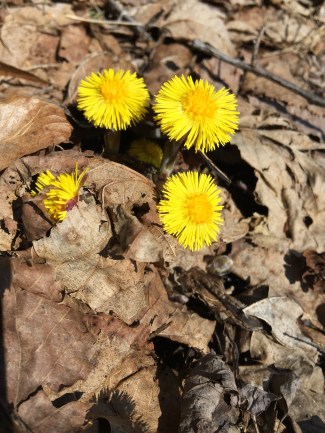
Spring arrives here about mid April and the last plants end their bloom sometime towards the end of September. The growing season is short. Since taking up residence here in the country,  I have been chronicling the march of the seasons by watching for the roadside flowers that are in bloom at any given time. And the very first plant to bloom is coltsfoot. It is a small dandelion like flower with a scaly stem. They can be seen growing on the gravel at the side of the roads or peeking out from under dead plant material. The hoof shaped leaves appear at the end of the flowering cycle, hence the name coltsfoot.

It is a welcome sight to these winter weary eyes and a sign that the season is just beginning. In the past it would not only have been a seasonal marker, but would have also been harvested as a cure for pleurisy, asthma and coughs. The Greeks and Romans had the best idea. They treated asthma by burning coltsfoot on charcoal fires and inhaling the smoke through reeds, alternating puffs with sips of wine. My kind of a cure!

If I had a sun dial for the seasons, coltsfoot would be found at number 1. It marks the beginning and holds the promise of all the other plants to follow. On this grey day  in April, that promise is enough for me.

Shhh…Don’t Tell Anyone

Yelapa Vignettes

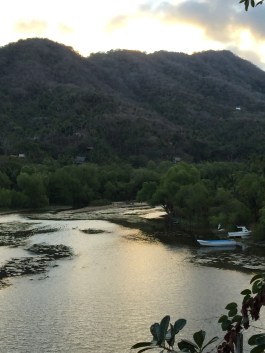
Yelapa (pronounced J-lapa) is located at the southernmost tip of Banderas Bay in Mexico. It turns out the geography which has made life more difficult in many ways has also been key in keeping life simple here. There are no roads that are car worthy connecting this settlement to the other towns further up and down the coast. It is rugged and mountainous and paths connect the houses built along the river valley to the town. Supplies, food and visitors come by boats which regularly do the commute between here and Puerto Vallarta forty-five minutes away. Electricity arrived in 2001 and is still limited so a flashlight is needed at night.

IMG_2106

This town awakes slowly. It gets lighter about 6:30 this time of year but the sun doesn’t poke above the mountains until 7:40. The Yelapa dogs are the first to rouse and spend the early morning chasing the shore birds and swimming back and forth in the river. The lucky ones find plastic bottles and bring them to the beach to greet the first visitors arriving by water taxi.

IMG_2138

The widest paths here are made of a very rough cobblestone and are about 3 meters wide – just wide enough to accommodate the burros/mules and small horses that ply these paths transporting people and supplies. (They are not quite wide enough for the four wheelers that are beginning to take hold here.)

We spend our mornings  hiking while it is still cool enough to explore. There is a one hour hike to the waterfall upriver that takes you on narrow, dusty, boulder strewn paths past small rancheros. The vegetation is lusher here in the river valley.

Yesterday we found the infamous mountain road to Chacala that can only be reached by truck and starts high above the village. It is a long, bumpy road that winds its way up and over the mountains. The trucks can’t get down into the village but a few are parked where the road becomes passable to them. I was trying to imagine what this trip would be like as I looked up the sinuous path and to the top of the first mountain that needed to be climbed. Not for the faint hearted.

One of our favourite walks is to the point with stunning ocean vistas. You might pass a burro or two carrying bags of cement to a building site further up the way.

IMG_2169

It is quiet here. The beach which is in the protected bay gets busy around noon when the IMG_2213tourist boats from Puerto Vallarta bring in the day visitors. They are gone by four and the beach chairs are mostly empty by then. The restaurants on the beach close early with only a few people lingering after hours to watch the sunset or eat at one of the beach restaurants that stay open after the tourists leave.

Yelapa is not for everyone. The terrain is mountainous and rugged and there are lots of stairs to climb. The accommodations are rustic for the most part.  But if taking a break from things a little off the beaten path appeals, this just might be the place for you. It is small and intimate and faces quickly become familiar – the waiter by night becomes the water taxi driver by day.

For this winter weary traveller, I leave Yelapa grateful that for a time I am able to “rest in the grace of the world, and am free.”

*Last line courtesy of Wendell Berry and his poem The Peace of Wild Things.

IMG_2239