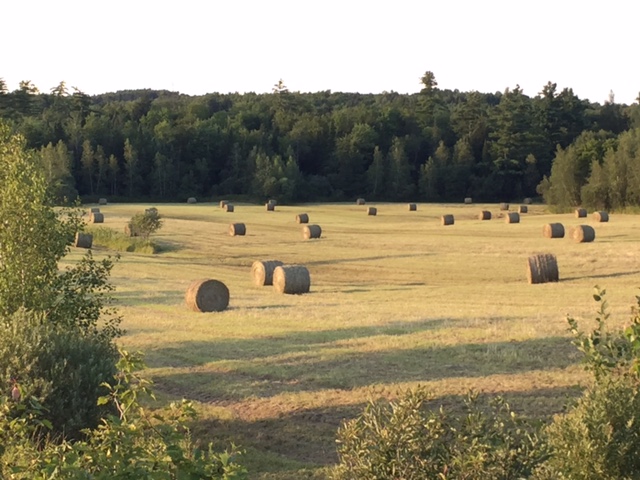
Fences Make Good Neighbours

I have been thinking a lot about boundaries lately. Mostly because we have a new piece of land that borders on a neighbour to the southwest and our new full time neighbour to the north.  Boundaries are never really an issue until they become one and I suspect this holds just as true for property boundaries as for personal boundaries. In the spirit of being respectful of boundaries, we have decided to discover ours.

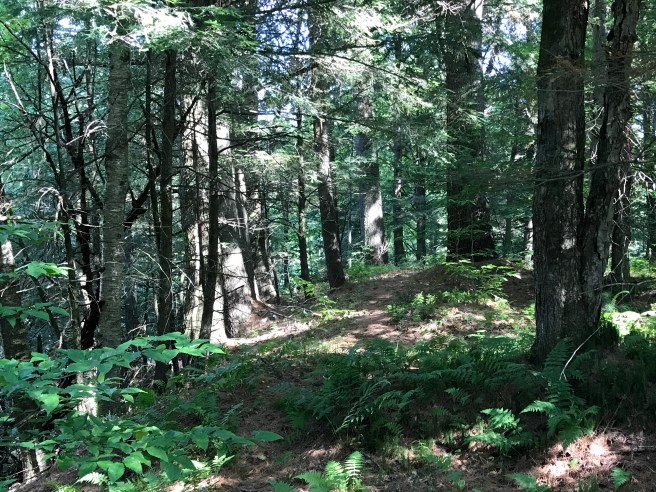
There is an old saying about fences making good neighbours, so this seemed like a logical first step in discovering our boundaries. We have had no need for fences on our land since we have lived here because we do not raise animals, but in years gone by people put up fences to demarcate their land whether they were raising animals or not. We have discovered pieces of the old fence over the years and yesterday decided to follow one of these lines to the end point which separates our land from the land next door.

IMG_0095.JPG

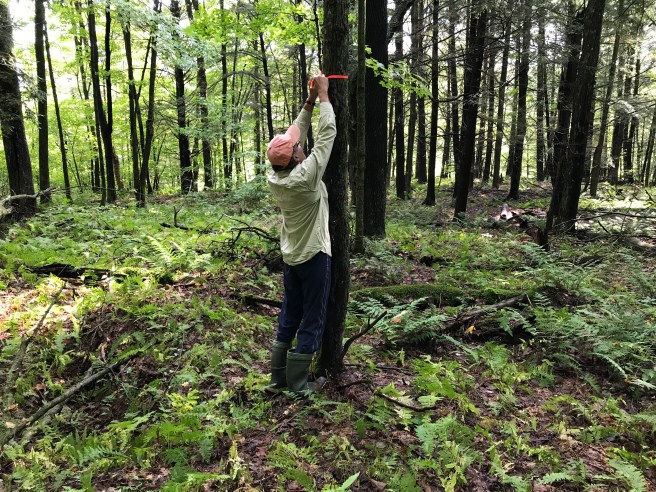
About seventy-five to a hundred years ago the fencer on our land used the trees growing in the woods as fence posts and tacked the wire to all the trees which lined up (approximately) with the boundary. As trees will do, they grew and as they grew the wire became embedded in the centre of the tree. To find our boundary we had to look for old pieces of wire coming out of large trees like this one, or look for it in dead or fallen trees on the ground.

As it turns out, our boundary is not at all where we thought it was.  Can’t help but wondering if this is the same problem with personal boundaries. Humm….

We marked all of the trees along this one line.
IMG_0099.JPG

When we got to the uppermost point, we discovered two things. Our neighbour to the north has become as interested in boundaries as we are. He has marked all the trees on our new tract of land that borders his property with the same orange ribbons. He is making hiking/ski trails and doesn’t want to be cutting trees on any land that is not his. (He’s a great neighbour!)  We also came across a wildlife camera belonging to another neighbour who has been hunting on our land for years. It’s strange to be this far back in the woods and see so many signs of human activity.

IMG_0103.JPG

Our boundary marking/discovering has been far from an exact science, but it sure does feel good to have a clearer idea of just what land we are supposed to be stewarding. And, more importantly, what land is not ours to be making decisions about!

I have come to understand that fences do make good neighbours, something our ancestors were very clear about. And we have all the old fence wire to prove it.

 

Rescued!

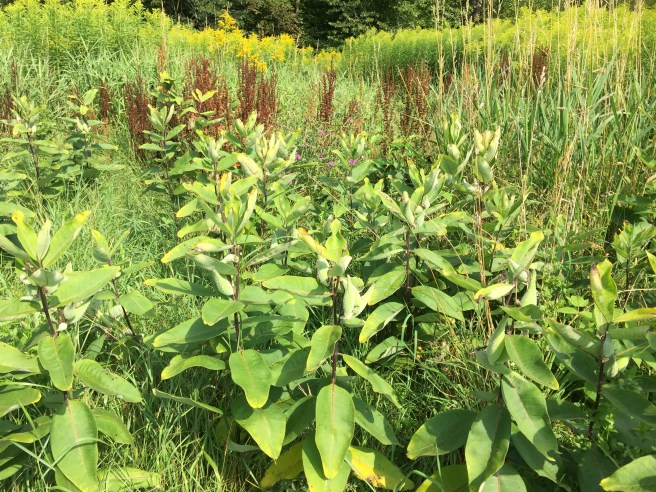
Two weeks ago I found a monarch caterpillar on the back of a milkweed leaf in the field across from our home. He was so tiny he was barely noticeable. What a difference two weeks can make. Here is the same caterpillar yesterday.

IMG_0063.JPG

When I brought this little guy home, it was as an experiment in raising a monarch. I have only seen a few monarchs these last couple of years and know the survival rate of the larva in the wild is less than 10%.  I was  feeling optimistic about them returning here in greater numbers when I saw that milkweed had taken hold again in the wild edges of the fields.

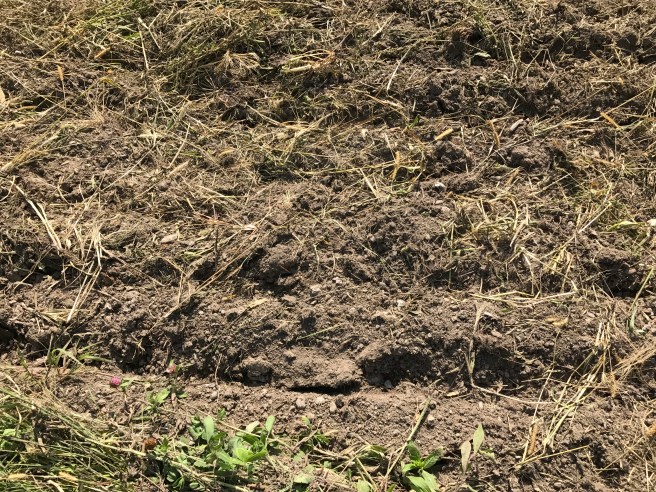
Little did I know when I started this experiment that it would turn out to be a rescue mission. Here is a picture (taken two days ago) of the same spot where I found the monarch caterpillar.

IMG_0062.JPG

The farmer had left the field fallow all summer and this past week he decided to harrow it. My caterpillar, and any of his siblings, would have lost their chance to continue on into future generations. Meanwhile, my rescued one should be making his cocoon any day now, if his size is anything to go by.

This is not a new or unusual story. Farmers plow their fields and wildlife  gets destroyed in the process. (I’ll tell you about the plight of the nesting bobolinks next spring.) What this does do, however, is recommit me to leaving the borders of our field wild so that we don’t play a part in the demise of any vulnerable species struggling for their survival.


Summer Collapses Into Fall

fullsizeoutput_25d.jpeg

It’s undeniable. The shift has occurred, or the collapse as Oscar Wilde writes. All of the other seasons seem to creep in around the edges, but not fall. The leaves on the trees are green – and then suddenly they’re not. One day we’re swimming, the next we’re wearing polars and searching out a sunlit place to have our morning coffee.

There’s a poignancy to the fall. Smells and sounds are intensified and nostalgia runs deep. The crate of apples at the back door, the muskiness of freshly raked leaves, and the honking of the first geese to fly overhead is the stuff of poetry.

IMG_0040.JPG    

Even the clouds hang differently in the sky at this time of year: they are lower and heavier and seem to blanket the landscape.  And the chillier nights have fog snaking into the valleys waiting for the weakening sun to burn it off a bit later each day.

IMG_0044.JPG

Fall is the last act of the seasonal play. Lucky for us, we all get to be actors in this final scene. For me, that means enjoying every mouthful of fresh produce while it is still available.

fullsizeoutput_26c.jpeg

And spending as much time outdoors as possible.

IMG_0053

Perhaps it’s knowing that the end is in sight that makes this last season all the sweeter. There’s no more looking forward, there is only now. And now is very, very generous.

Enjoy this transition to fall everyone!


Three Simple Kitchen Tools

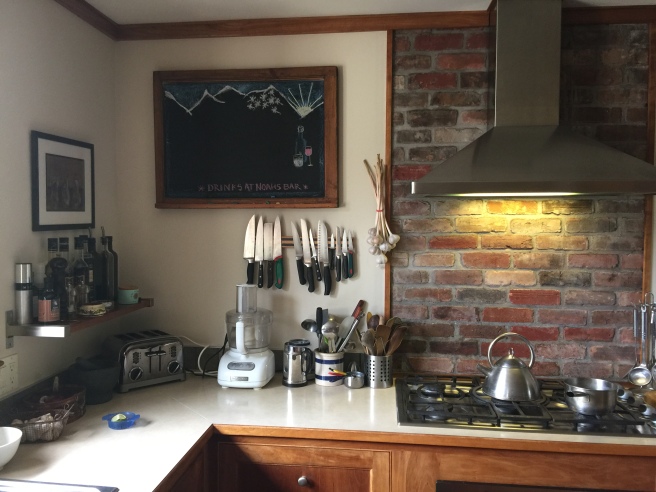
We had family visiting last weekend and I was appreciating once again how well the kitchen works. It is not the biggest kitchen nor the most modern, but it is well equipped and functional.

IMG_3062

I have a great selection of knives within arm’s length, the onions and garlic sit in baskets on the counter, and the olive oil and vinegars are an easy reach away. For me, when it comes to cooking, it’s about easy access to all the major kitchen tools. And by this, I don’t mean fancy electric machines. I thought I would show you this morning the three tools I reach for the most often when I am cooking – the ones I can’t do without.

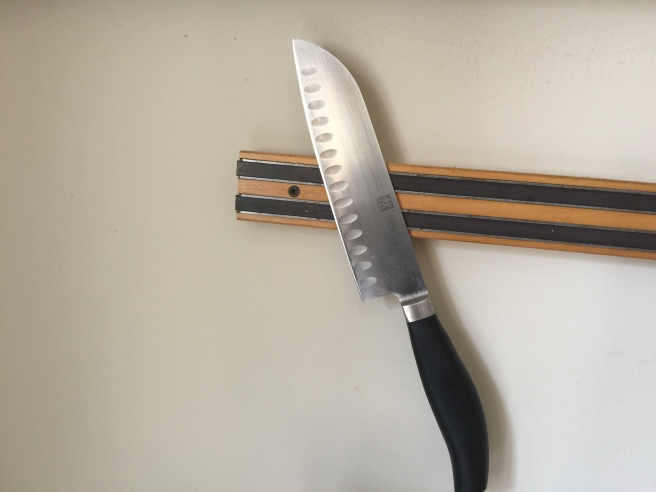
The first is my Santoku kitchen knife.

IMG_3063.JPGThis one is a Henckel 7 inch and is lightweight and always sharp. These knives come in different qualities and at different prices. You use a knife every day, so I would recommend buying the best quality one that you can afford. (That said, I have used cheaper knives that also seem to work just fine.) This Santoku seems to satisfy most of my cutting needs. My advice is to find a knife that works for you. There are many great knives out there, but it has to have a comfortable grip and be the right weight for you. When you find your knife, you won’t look back!
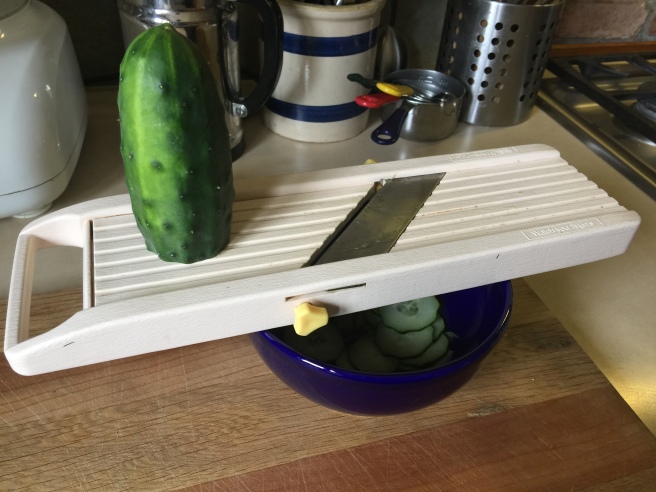
I use this Japanese Benriner mandoline every day.

IMG_3064.JPG

It lives in the drawer below the counter and is simplicity itself: small, portable and easy to clean. I bought it years ago at a Chinese grocery store (Kim Phat for those who might be reading in the Montreal area), but you can order them online at Amazon. I know there are lots of fancier ones on the market, but again I return to my theme of simplicity. They come with multiple blades, but I seem to only use the slicer and it can be easily adjusted for thicker or thinner cuts. I use it to cut cucumbers, onions, radishes, fennel and anything else that requires thin slicing. I also use it to slice potatoes for scalloped potatoes and cabbage for coleslaw. It comes with a plastic guard that really does need to be used, especially when you get near the bottom. The blade is sharp! They come in two widths. The one I have is the narrower of the two, but when I upgrade I will go for the little wider one.

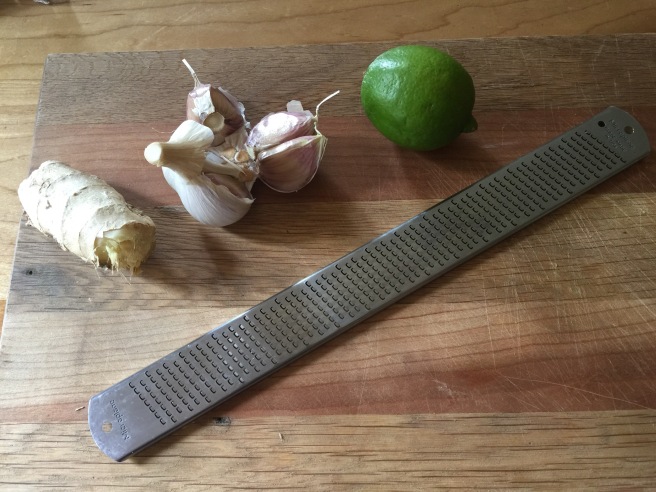
The last simple tool that I use often is this rasp that I bought at Lee Valley Tools years ago.

FullSizeRender 5

It has become a bit dull over the years. This is a testament to how often I use it. Grated parmesan on the rasp is light and airy and you’ll find you don’t need as much as when grating on the regular box grater. Bring it to the table after and allow people to grate their own. It is also a super zester for lemons and limes and makes quick work of ginger and garlic. (If you are interested in purchasing the rasp, I have included the link here.)

Voilà, three simple tools that you might not be able to live without either.

I am wondering if you have a kitchen tool you can’t live without? If so, why not share it in the comments. Maybe I’ll find a new favourite!


Well Lookee Here!

IMG_3047.JPG

I found this little guy on the last leaf of the last milkweed plant I looked at on my walk Friday. And I almost missed him. He looks quite impressive in this photo but he is actually very tiny, about the length of a dime.

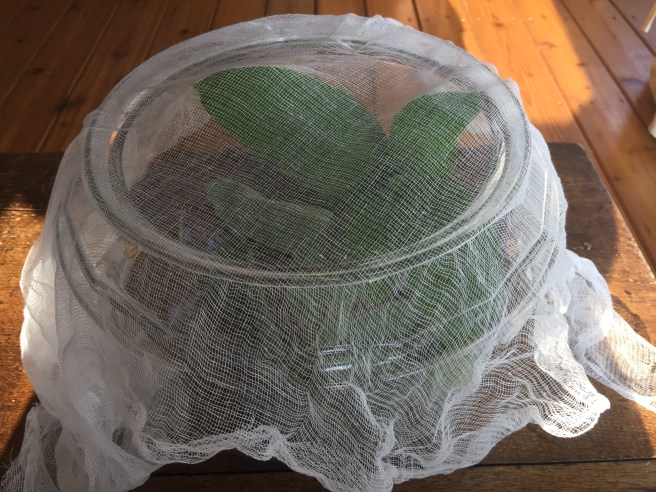
He is now living on the screen porch in a fish tank with a fresh supply of milkweed leaves but has not ventured from the leaf where I found him. The edges of the leaf have been nibbled on both ends, so I know he has been moving about.

IMG_3054.JPG

It takes a monarch about a month to go through the stages from egg to adult – egg, larva (caterpillar), pupa (chrysalis) and adult. My newly found larva has a lot of growing to do in a very short time. And I am a bit worried. I have discovered that like all good ideas I bluster upon, it can be more complicated than it seems at first. For instance, I read that monarchs are usually raised in mesh cages for air circulation and that the milkweed leaves should be placed in water to prevent them from drying out. I don’t have a mesh cage, but I did place cheesecloth on top of the tank so that he can’t escape but still has a supply of fresh air. I have added a new sprig of milkweed and placed it in some fresh water. We’ll see… I’ll keep you posted.

IMG_3056.JPG

Seven Things I Learned in Seven Days

Tumultuous weeks call for introspection, of sorts, and this last week has been tumultuous on many levels. In that spirit, I have come up with seven things I learned in the last seven days.

I have learned that:

  1. Now is not the time to stay neutral by remaining silent. I stand vehemently against racism and the white supremacy movement. I have been riveted (addicted) to the news coming out of Charlottesville, Virginia. I have been watching news clips, reading editorials and opinion pieces, and been glued to twitter. Nothing POTUS has said, or not said, has surprised me. (I spent three anxious months after the election fearing most of what has already come to pass. Those months inoculated me against disbelief and sleepless nights.) We are at a cusp and the choice is to move forward with less fear and hate or to combust. I choose to move forward and will do whatever I can to help others move forward also.
  2. I can’t live without my glasses. I lost my glasses while I was gardening on Monday and I spent over an hour looking for them like a madwoman. I crawled under hosta plants, combed through the foliage on every bush, and inched my way over all the newly worked soil. Bees have nothing on me when it comes to covering ground in the garden! I finally remembered I had gone down to the brook to wash my face.IMG_3038
  3. It requires bravery to repair miscommunications that have resulted in hurt feelings and misunderstandings. I am far from perfect at it, but in my own stumbling way I open up the conversation. And it is so worth it.
  4. Knitting is good for my nervous system. I stopped knitting sometime in April when I returned from vacation and changed my focus to getting the house and gardens ready for the new season. I picked it up again this week. Knitting is my meditation. It allows me to sit, empty my mind, and come back to the present – one stitch at a time.FullSizeRender 4
  5. Monarchs are a beautiful reminder of the fragility of our eco-systems.
  6. Old friends are the best. Even if we have all taken very different paths, the connections that brought us together in the first place are still there. Old friendships seem solid and grounding like no others.
  7. Hard weeks are important now and then. How else do we become stronger and braver?

Wild Places

IMG_3033.JPG

I have been thinking about wild places lately and by that I don’t mean the wilderness that surrounds me just steps from my gardens. I am thinking more about those untended places that grow scrub grasses and bushes. I remember reading years ago that people in Europe always left sections of their backyards wild. The mystical among them thought it would be good karma to leave space for the wee folk and fairies. Others might have garnered that these wild spaces were very valuable real estate for other reasons. Wild spaces are homes to birds, insects, butterflies, bees and other pollinators that are crucial for the crops that feed us. It’s about having a balanced ecosystem.

What got me thinking about all this was seeing that at the corners of our fields and in the untended places  the milkweed have returned and along with them the monarch butterflies.

IMG_3021.JPG

When we first moved here our field had been left to revert to its wild state. It was overgrown and alive with milkweed, Joe-Pye weed and goldenrod in the late summer. I remember the air being full of the silky seeds from the milkweed pods on breezy fall days. This changed as we became managers of our field and plowed it to grow vegetables and then after that had it cut once or twice a year for hay. The floods these last few years have left the edges of the field difficult to cut and they have once again returned to their wild state.

I think all of this is a very good thing for our property and for the eco-system we are trying to nurture. As an added bonus, the wild areas at this time of year are  very, very beautiful. They are dominated by goldenrod and Joe-Pye weed,  a truly magnificent combination of mustard yellow and rose-lavender. In certain lights the blending of the two just takes my breath away.

IMG_3029 2.JPG

I have been checking out the health of the newly returned milkweed plants and have noticed that they have already formed the green cob-like pods. I was also looking for signs that the monarchs I have seen around are laying their eggs for their last transformation. There is a bit of urgency now because the newly hatched butterflies will have a long migration ahead of them before the cold weather sets in.

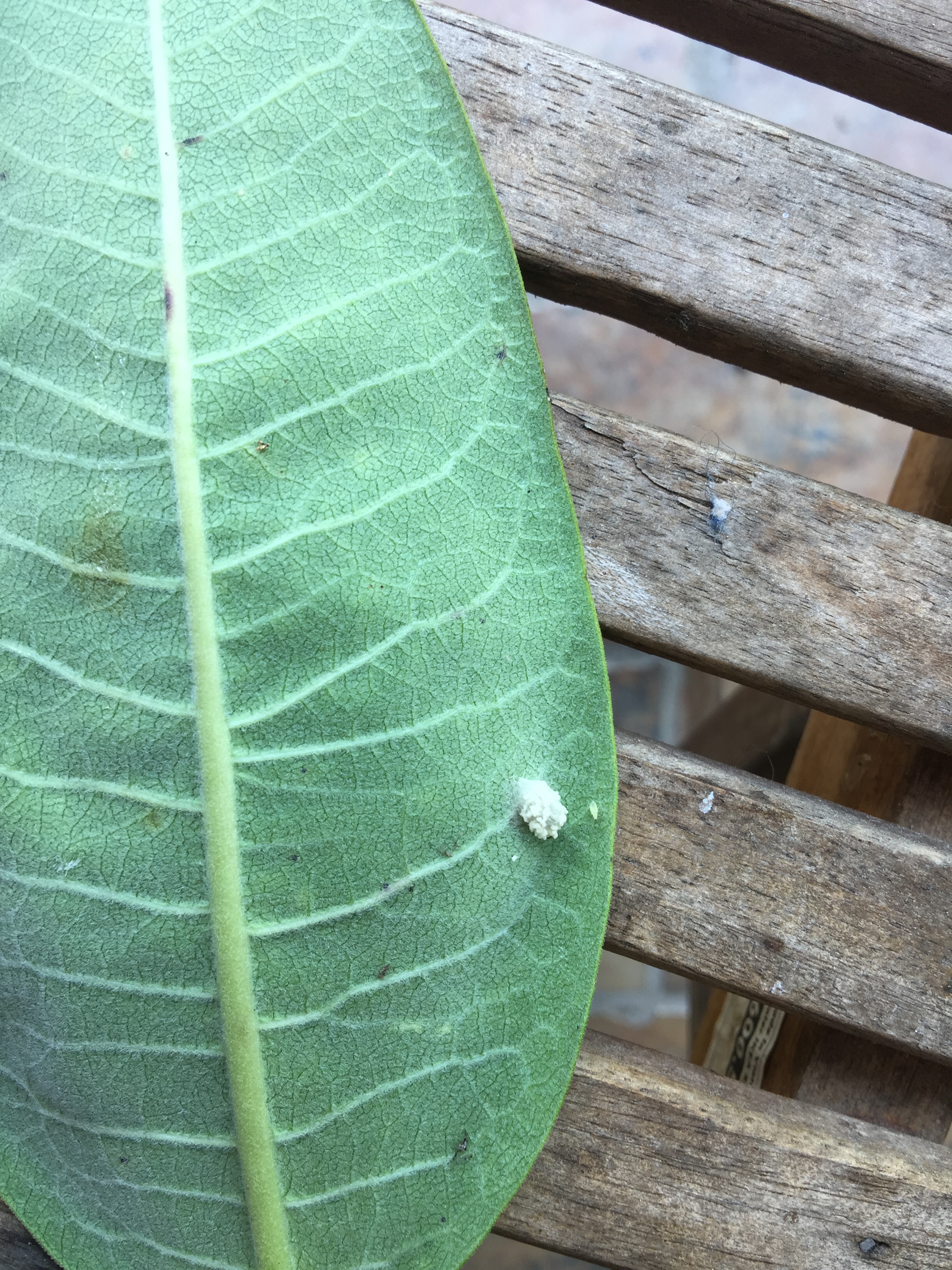
I found a leaf in the field that appears to have an egg on the underside of its leaf and have brought it home so that you and I can watch this miracle happen. If you have never seen a monarch pupa, you are in for a big treat. Let’s hope that I have found the egg I am looking for.

IMG_3025.JPG

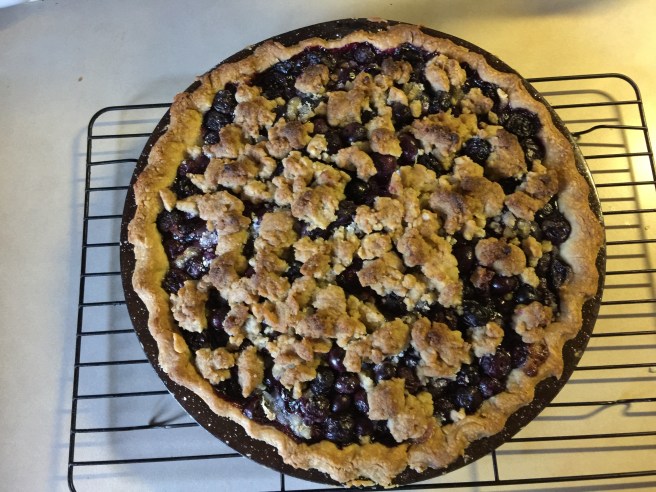
I Made a Pie…Blueberry Pie

FullSizeRender 3.jpg

It’s blueberry season here in Quebec. I always freeze blueberries for the winter, but I have never made a blueberry pie. In fact, I rarely make pies at all, so it’s a bit surprising that this summer I have made two.

My 96 year old mother asked for a  Shoo Fly pie for her birthday  this year. (This is an old Pennsylvania Dutch recipe that uses flour and molasses as its base.) My mother has been a pie maker all her life and would think nothing of making pies most days. Me…not so much. Her birthday wish forced me to revisit pie making. I felt it was the least I could do – a little pay back for all the pies she made me over the years.

The problem I have been having with pies lies in the crust. Most of the flaky pie crusts I have tasted made by country cooks are full of vegetable shortening or lard. I am not happy eating or cooking with these fats and long ago switched my allegiance to butter. The few butter crust pies I have made have not been flaky and rolling them out has been something of a nightmare. That is, until this summer.

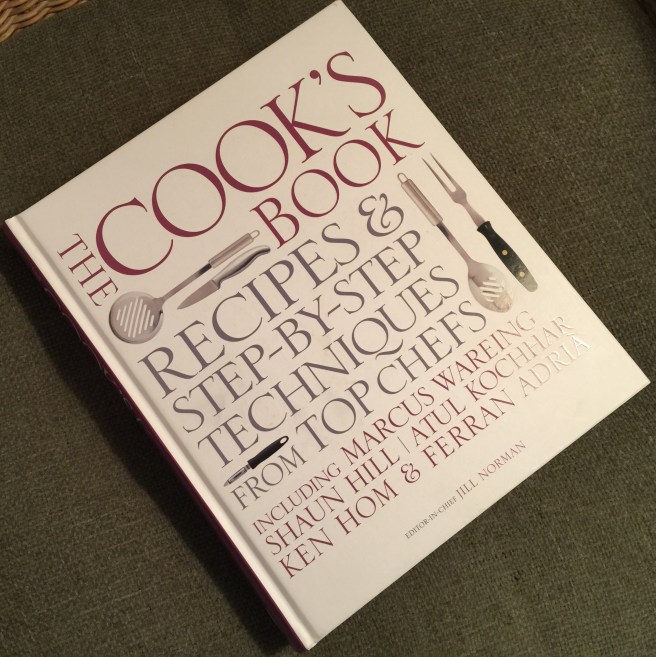
My daughter and son-in-law gave me this book a few years ago…and well, I am thinking everyone needs this book.

FullSizeRender 2.jpg

The Cook’s Book is full of techniques and recipes mastered by chefs. In this rather heavy book, I found the recipe that has altered my view of making butter crusts or  pâte brisée (shortcrust pastry). This pastry can either be made by hand or in a food processor.  For full disclosure here, I have to tell you I ran into the same problem with this recipe as I did with all of the others I have made. The recipe itself is a breeze and the dough comes together well, but like all shortcrust pastries, they call for it to be chilled in the fridge for at least two hours before rolling. This is where I broke with tradition. I recently read that it doesn’t matter when the dough is chilled – just that it be chilled before baking. I decided to roll the dough while it was still pliable and then chill it in the fridge in the pie pan. Some far better and much more experienced pastry chefs might dispute this, but all I can say is it worked for me. There was far less swearing as I was rolling out the dough and for that alone the switch-up was well worth it.

For this blueberry pie, I had only one crust, so I made it with a crumble top. I combined two online recipes  that I found for blueberry crumble pie – one from Epicurious and one from Allrecipes. I used the filling recipe and the baking temperature and time  from All Recipes and the crumble topping from Epicurious.  It turned out well. The crust was flaky and the pie delicious.

I just might turn into a pie maker after all.

L’heure Bleue

I have just recently been introduced to the French term l’heure bleue. L’heure bleue rolls off the tongue and sounds romantic, and magical, and a bit mysterious. As it turns out, that is exactly what it is. It is said that flowers are more fragrant and birds sing more sweetly during this hour of the day. L’heure bleue, translated as the blue hour, is that time early in the dawn or late in the dusk when the sun is still below the horizon and its indirect light takes on a blue shade. In the morning, l’heure bleue is followed by the golden hour when the landscape becomes bathed in golden light. This is reversed at dusk when the golden hour is followed by l’heure bleue.

It just so happens that these are my two very favourite times of day, so I am often outside marvelling in them, or if I am lucky, capturing a photo of the magic they weave. Even though they are referred to as hours they are actually a brief forty minutes in length.

I have just started exploring photographing l’heure blue even though I know it on a visceral level from all my evening walks.

IMG_2056.JPGPhotographing a full moon during l’heure bleue.

IMG_2390A spring walk.

IMG_2927.JPGA photograph from last night’s walk.

If you are in any doubt about l’heure bleue,  listen for the birds!

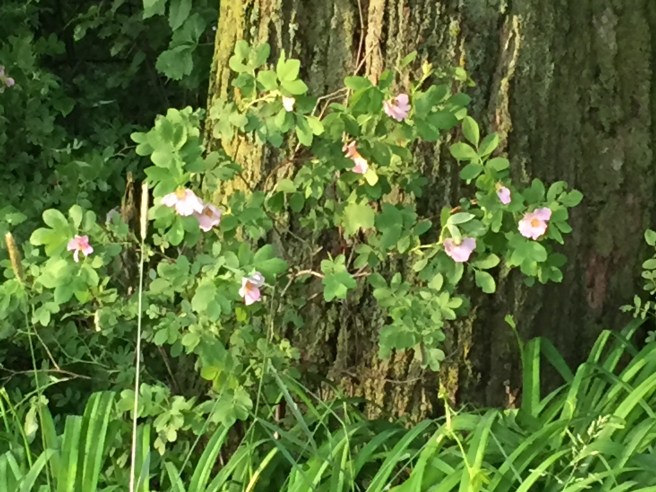
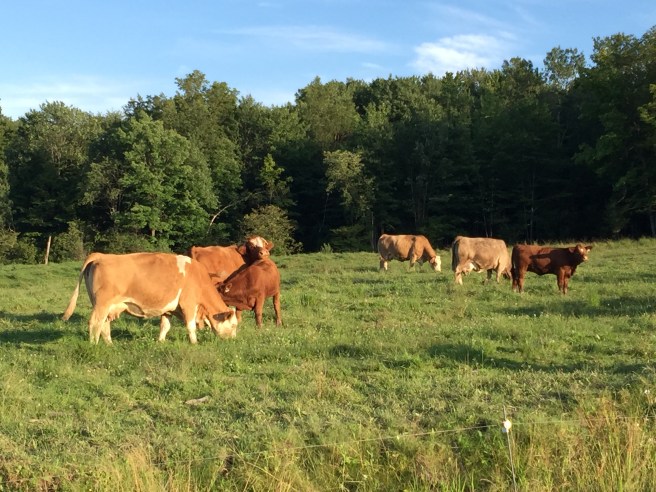
Golden hour which just precedes l’heure bleue in the evening has a very different quality of light. Everything seems to be bathed in gold.

IMG_2712Roses on Solstice Eve.

IMG_2899.JPGCows enjoying the golden hour.

IMG_1142Golden hay bales.

Golden hour and l’heure bleue have two very different feelings and qualities of light.  Both very special. Both worth being out there enjoying.


The Wheel of the Year Is Turning

The beginning of August marks a turning point. The sun has shifted in the sky and sets just a bit lower and earlier than it did a short month ago. Nights have become cooler. (We have just had our first 6° and 8° celsius nights here in southern Quebec.)  The plant world has stopped exploding with new growth and has started setting fruit. 

August 1 was the beginning of Lammas in the medieval agricultural year and marked the end of haying and the beginning of the harvest season. Very exceptionally this year the haying season was delayed because of the constant rains. It is unusual to see farmers still making their first cut so late in the season. IMG_1142

I always greet the light and temperature changes with some sadness. It is hard to let go of  the headiness of those first summer days.  Maybe that’s the beauty of old celebrations centred around this time of year. It’s a reminder to move forward whether we want to or not: much better to be in step with nature rather than ignoring its pull.

Along with the sadness of a season passing is the excitement of the new one on its heels. Time to reap the rewards brought to us by the long, sultry summer days. The tables at the farmer’s market here in our village are piled high at the moment with fresh produce and local blueberries and fresh corn have made their first appearance. What’s not to love about the bounty of this latest growing season?

Our eyes may have shifted into a more forward gaze but these last warm days of summer can be the best just because they are the last.  My wish is for us all to savour August this year.

Happy August everyone!